
Stoneware Classic
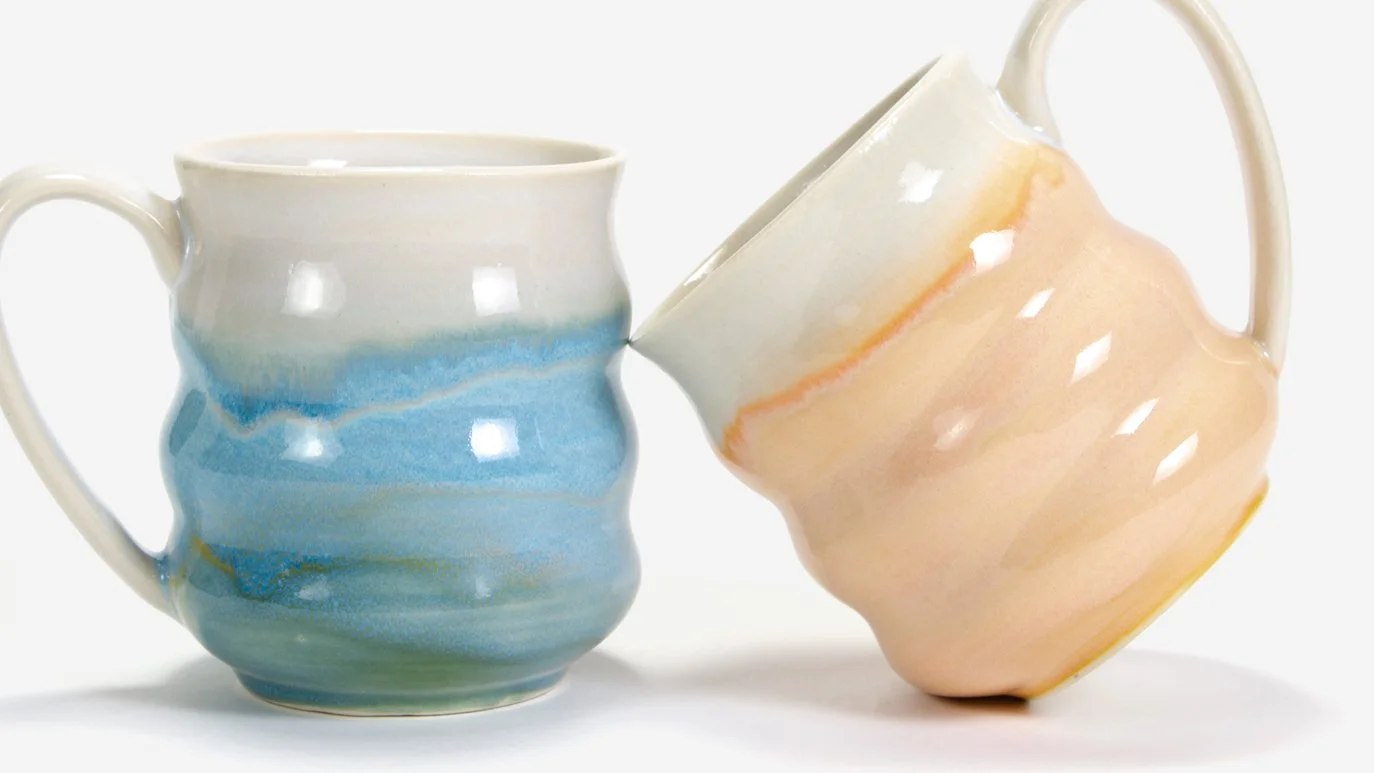
Mayco’s Stoneware Classic glazes satisfy a variety of performance and color selections that range from bright and vibrant to earthy and subdued. Our Stoneware glazes provide a variety of finishes, movement, and variation. Some glazes are high gloss, opaque, and flat in color, while others have a more complex surface that is varied in both finish and color. The Stoneware Classic glazes also include Opals and Ice (translucent) glazes. These glazes heighten surface details where they gather and pool, work well on a variety of clay bodies and have a firing range from cone 5-10.
1 Pint - 16oz
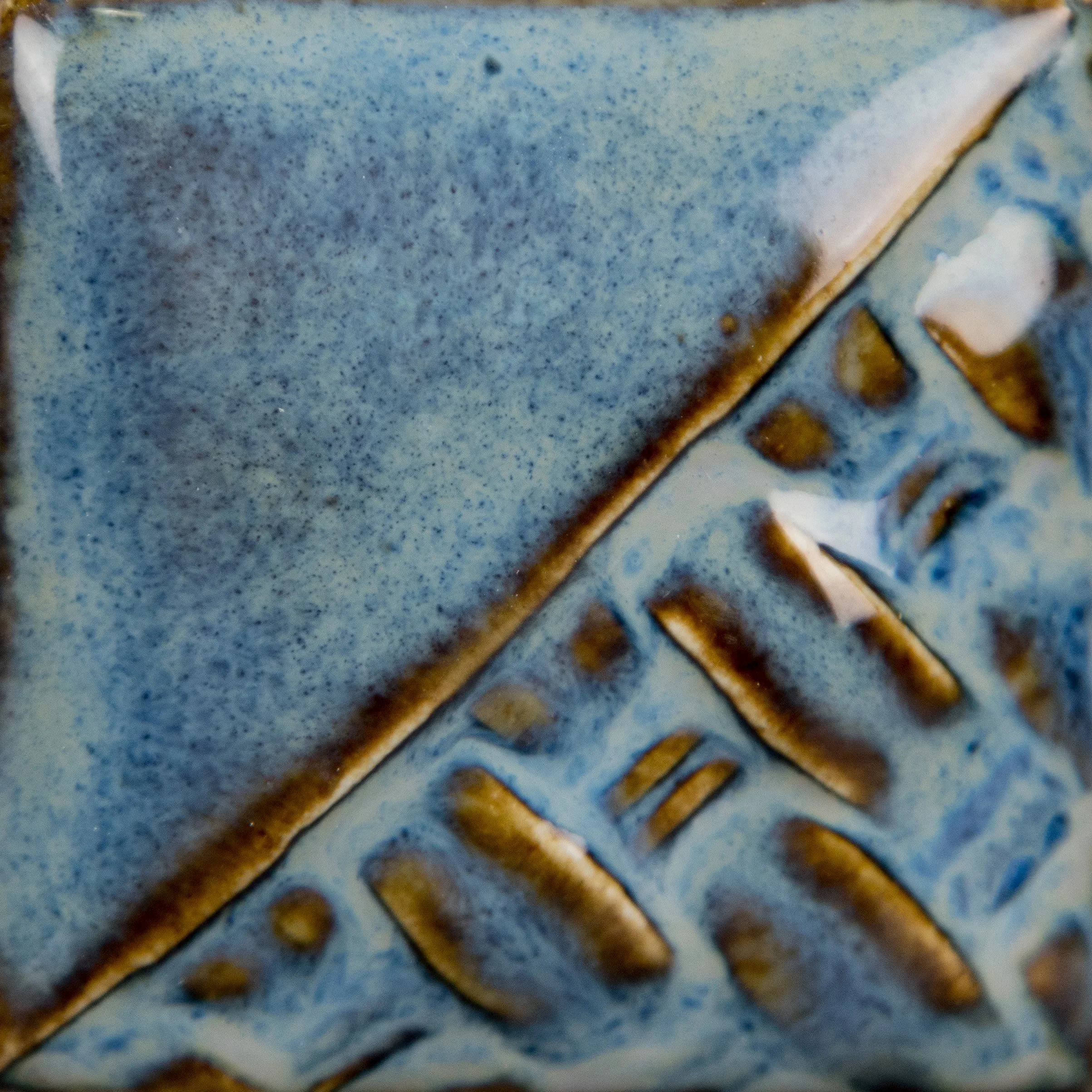
Cone 6 oxidation (larger image): Stoned Denim is a variegated blue glaze that breaks brown.
Cone 10 reduction (smaller image): Color darkens.
TIP: The thinner the application the more brown the glaze will be. The thicker the application, the more blue the glaze will be. Where the glaze breaks it will be brown.
SW-109 - 1 Pint
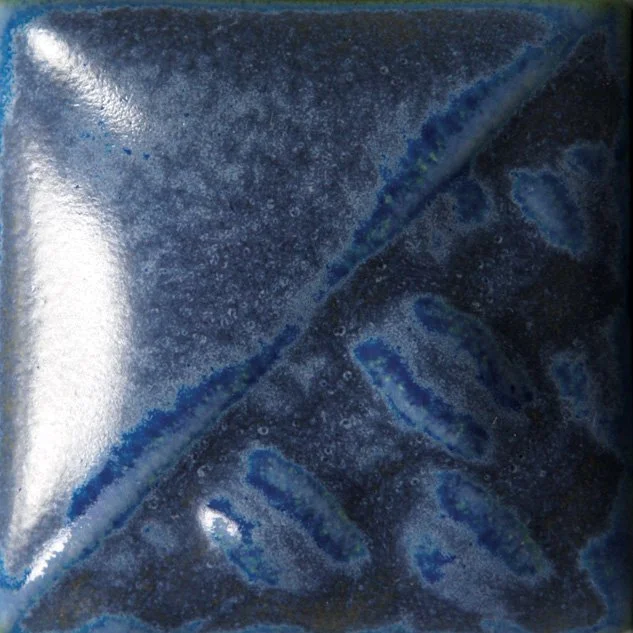
Cone 6 oxidation (larger image): Capri Blue is a variegated blue glaze that breaks over texture.
Cone 10 reduction (smaller image): Semi-gloss finish with variegated blue/green.
TIP: The lighter the application the greener the glaze. The thicker the application the bluer the glaze. If you like Green Tea and oyster combos, try Capri blue because those 3 glazes are in the same glaze family. Gloss finish.
SW-108 - 1 Pint
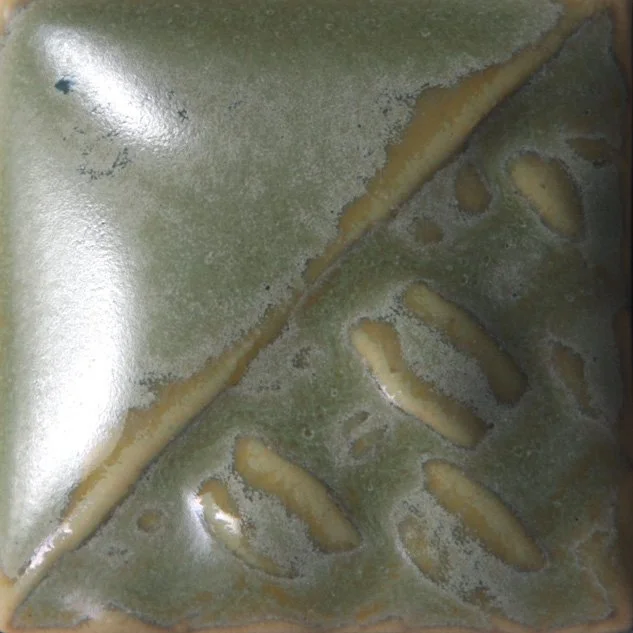
Cone 6 oxidation (larger image): Green Tea is a variegated sage green glaze that breaks over texture and can produce a glossy blue finish.
Cone 10 reduction (smaller image): Color changes to a variegated pink/blue/green.
TIP: If the glaze comes out with more of a matte finish then re-fire to produce more variation in the glazed surface. Thinner application of this glaze will produce less crystals. Thicker application will produce more crystals. This glaze has a gloss finish. This glaze combos well with other Mayco glazes. If you like combos with Capri blue and oyster, try green tea because they are in the same family of glaze.
Wood and soda firing results will vary.
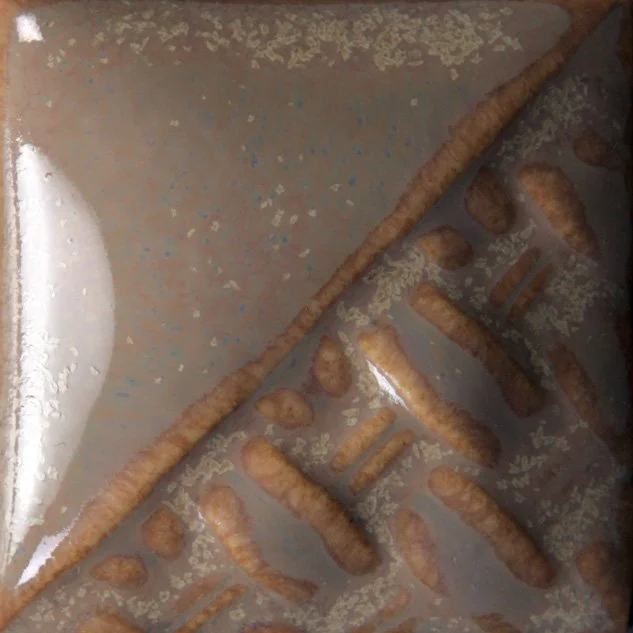
SW-110 - 1 Pint
Cone 6 oxidation (larger image): Oyster is a variegated cream/brown glaze that exhibits gray/purple undertones and breaks brown.
Cone 10 reduction (smaller image): Color changes to a variegated brown/cream. Increased movement.
TIP: If your kiln fires cool, the glaze finish may be brown. An iridescent finish may be achieved by re-firing or if your kiln fires hot. If you like Green Tea and Capri Blue combos, then try oyster because these three glazes are in the same glaze family.
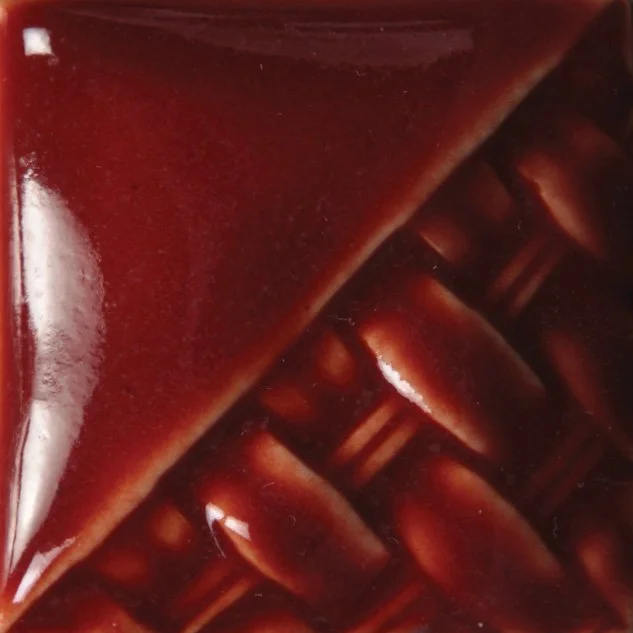
SW-119 - 1 Pint
Cone 6: Cinnabar is a rich maroon-red gloss glaze that tends to develop a hazy purple float with heavier application.
Cone 10: Color darkens.
TIP: One to two coats will produce an opaque maroon-red; three+ coats will produce higher levels of purple float. You’ll produce beautiful color variations with Cinnabar without the glaze running off your ware during a cone 6 oxidation firing.
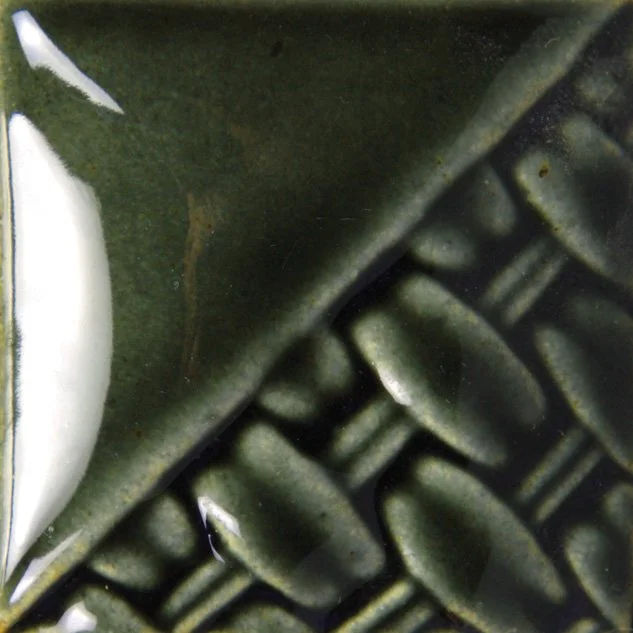
SW-120 - 1 Pint
Cone 6 oxidation (larger image): Northern Woods is a semi-transparent bluish-green glaze. Lighter applications will produce a light translucent green with brown hues. As
additional coats are applied the green hues will deepen and develop a bluish tint. Very nice on white stoneware and porcelain.
Cone 10 reduction (smaller image): No Change
TIP: This glaze breaks brown and when applied thin the color will be brown. Apply three heavy coats to get the deep green color.
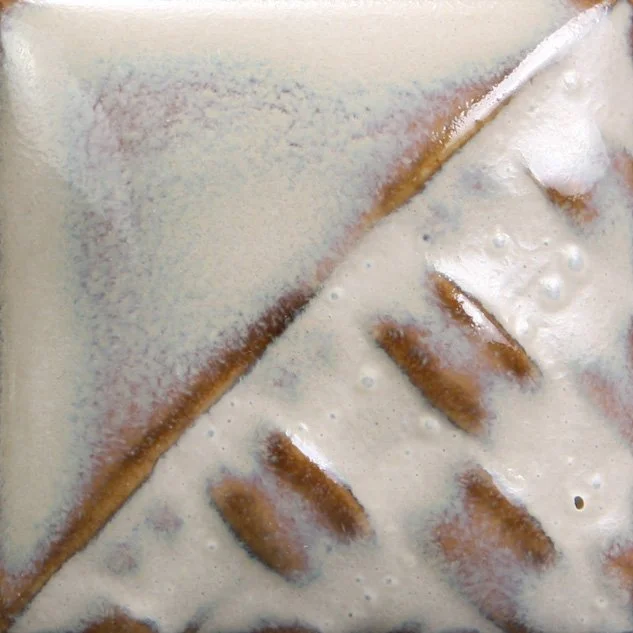
SW-131 - 1 Pint
Cone 6 oxidation (larger image): Birch is a creamy opaque off-white glaze that breaks brown.
Cone 10 reduction (smaller image): Cream color remains and brown undertones darken.
TIP: The thinner the the application, the more amber the glaze will be. The thicker the application, the more white floating you will get.
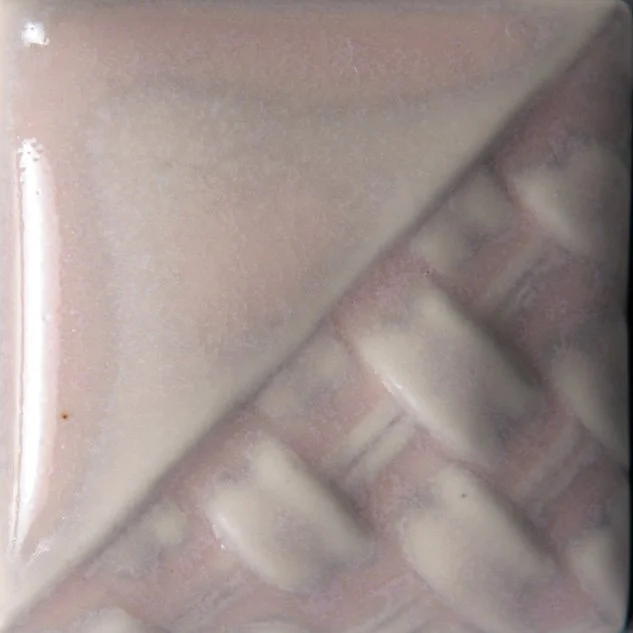
SW-143 - 1 Pint
Cone 6 oxidation (larger image): Abalone is formulated to produce a breaking white and mauve semi-gloss glaze. Light applications will produce a more white semi-gloss finish. Use three+ coats to achieve semi-gloss Abalone finish. Clay body characteristics will be visible through this glaze.
Cone 10 reduction (smaller image): Color darkens to purple.
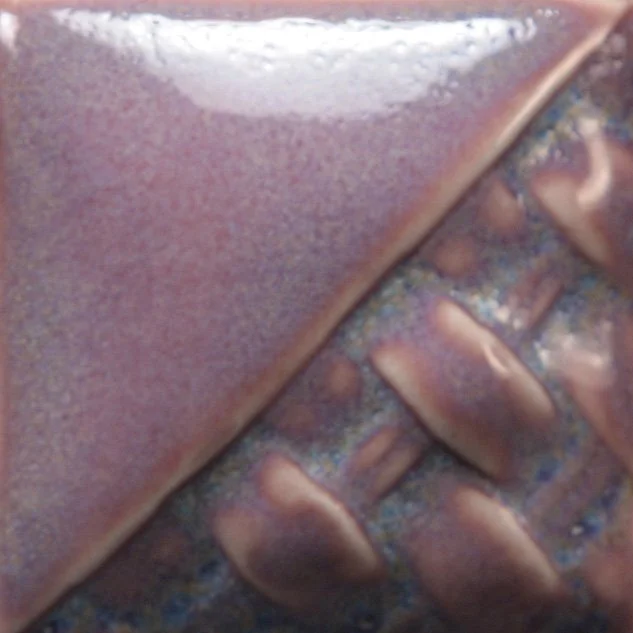
SW-165 - 1 Pint
Cone 6: Lavender Mist is a semi-opaque gloss glaze that displays shades of lavender and brown. The variation of the glaze is dependent on application; Thicker application will result in a more opaque and homogenous color.
Cone 10: Color darkens.
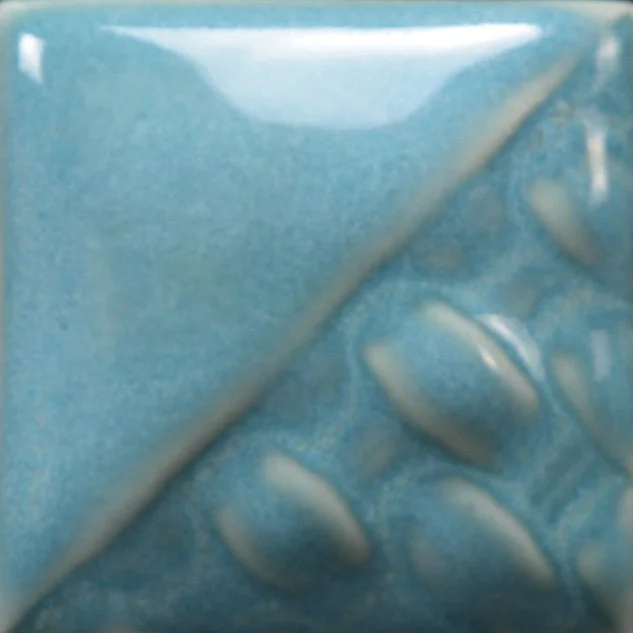
SW-166 - 1 Pint
Cone 6 oxidation (larger image): Norse Blue is a semi-opaque blue gloss glaze that displays shades of light blue and green. The variation of glaze depends on application. The thicker the application, the more homogenous the color will be. The glaze will break translucent where thinner and pool darker around surface textures.
Cone 10 reduction (smaller image): Color darkens.
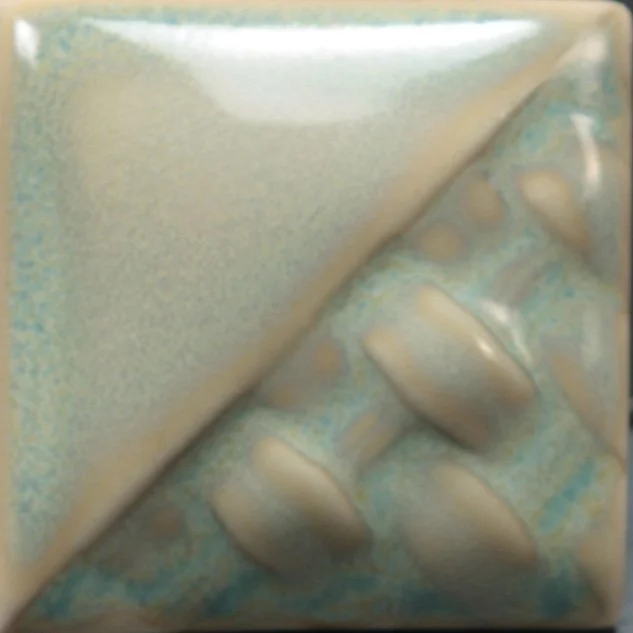
SW-167 - 1 Pint
Cone 6 oxidation (larger image): Sand & Sea is a semi-opaque gloss glaze that displays shades of light green and gold. The variation of glaze depends on application. The thicker the application, the more homogenous the color will be. The glaze will break translucent where thinner and pool darker around surface textures.
Cone 10 reduction (smaller image): Color changes to cream/gray/brown.

SW-169 - 1 Pint
Cone 6: Frosted Lemon is a semi-opaque gloss yellow glaze that displays shades of yellow and white. The variation of glaze depends on application. The thicker the application, the more homogenous the color will be. The glaze will break translucent where thinner and pool darker around surface textures.
Cone 10: Color changes to a light pink/purple
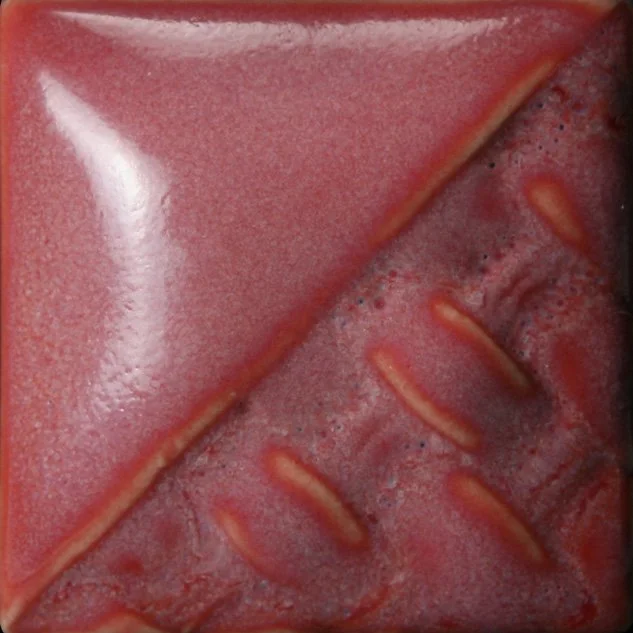
SW-177 - 1 Pint
Cone 6 oxidation (larger image): Raspberry Mist is a gloss, semi-opaque glaze that displays shades of dark and light pink. The variation of glaze depends on application. The thicker the application, the more homogenous the color will be. The glaze will break translucent and appear brighter with thinner application.
Cone 10 reduction (smaller image): Color darkens to a deep red.
TIP: Over application of Raspberry Mist can cause pinholing. Brighter color and less variation at cone 5.
Wood and soda firing results will vary.

SW-178 - 1 pint
Cone 6 oxidation (larger image): Fool’s Gold is a gloss, semi-transparent glaze consisting of a rich brown base with tiny, gold metallic flecks. The variation of glaze depends on application. The thicker the application, the more homogenous the color will be. The glaze will break translucent and pool darker around surface textures.
Cone 10 reduction (smaller image): Color darkens and produces metallic mottling.
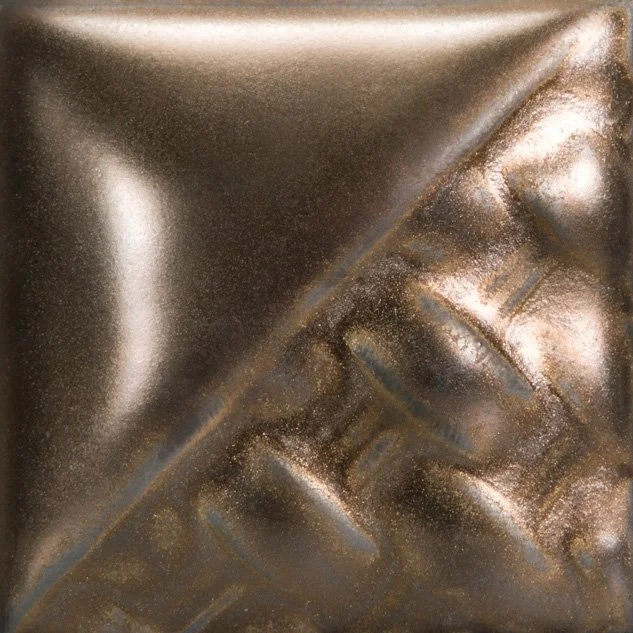
SW-182
Cone 6 oxidation (larger image): Antique Brass is a soft matte, metallic brass glaze that breaks charcoal.
Cone 10 reduction (smaller image): Brass finish becomes brighter and more metallic. Increased movement.
Note: Not recommended for dinnerware due to surface durability.
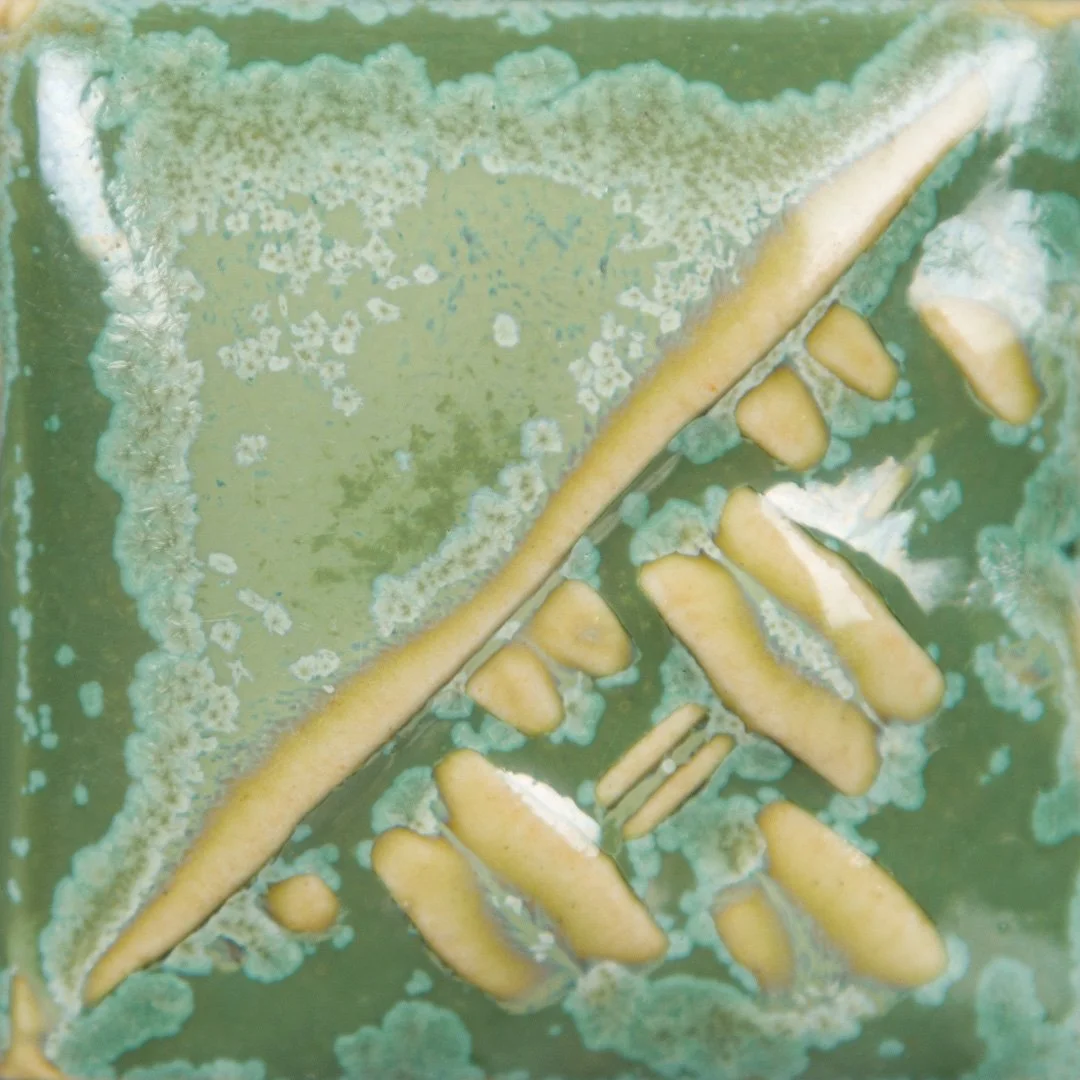
SW-193 - 1 Pint
Cone 6 oxidation (large photo): Ivy is a glossy, opaque, variegated green glaze with that breaks over texture and has an iridescent sheen. Green micro-crystallization may develop.
Cone 10 reduction (small photo): Glaze shifts to a variegated jade that breaks purple over texture. Micro-crystallization enhances.
TIP: This glaze is fluid; Apply receding coats to avoid runoff on vertical pieces and practice caution in combination. Prone to pinholes when fired on manganese clay bodies.
Wood and soda firing results will vary.
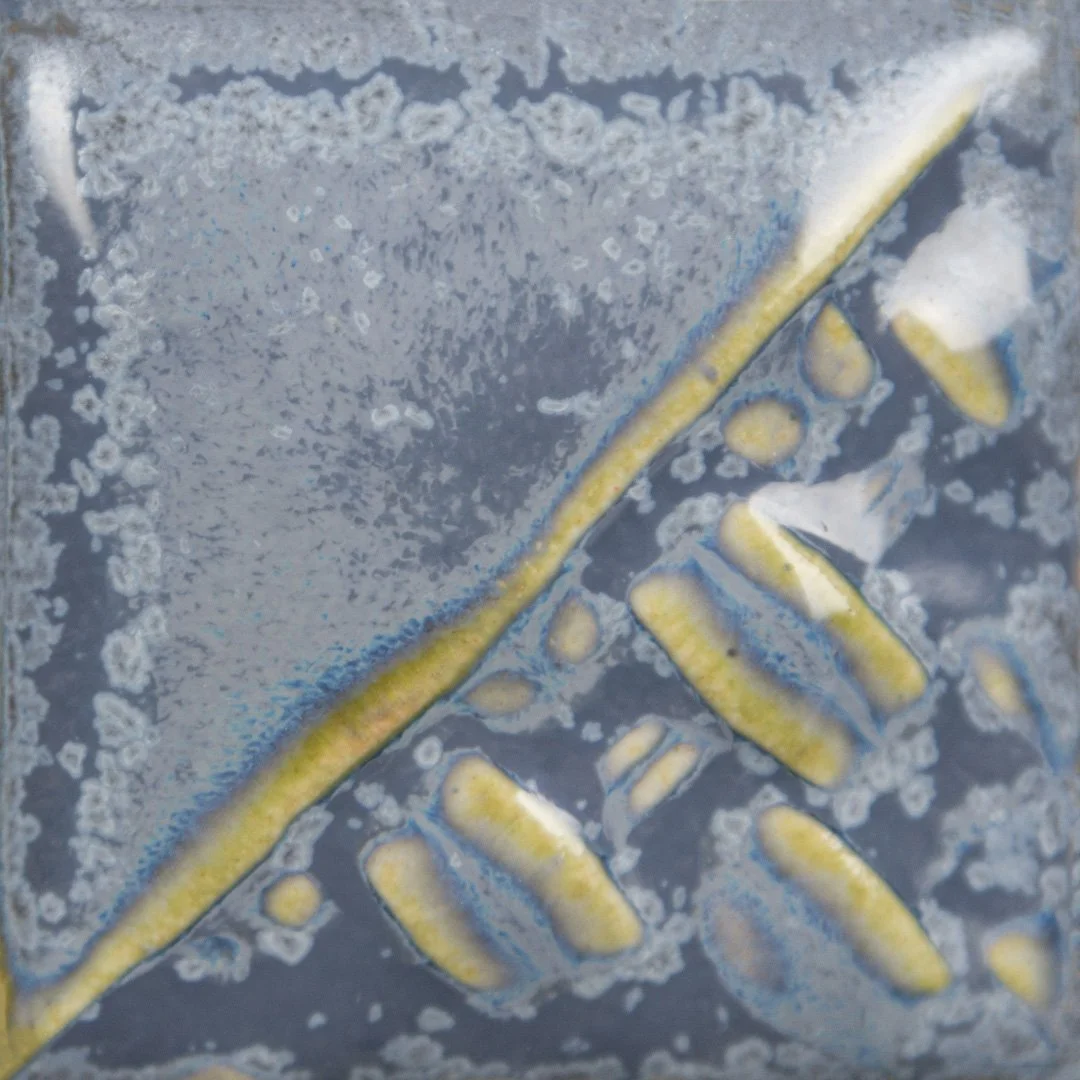
SW-194 - 1 Pint
Cone 6 oxidation (large photo): Nimbus is a glossy, opaque, variegated blue glaze that breaks over texture and has an iridescent sheen. Blue micro-crystalization may develop.
Cone 10 reduction (small photo): Glaze brightens to a variegated cyan that breaks green/brown over texture.
TIP: This glaze is fluid; Apply receding coats to avoid runoff on vertical pieces and practice caution in combination. Prone to pinholes when fired on manganese clay bodies.
Wood and soda firing results will vary.
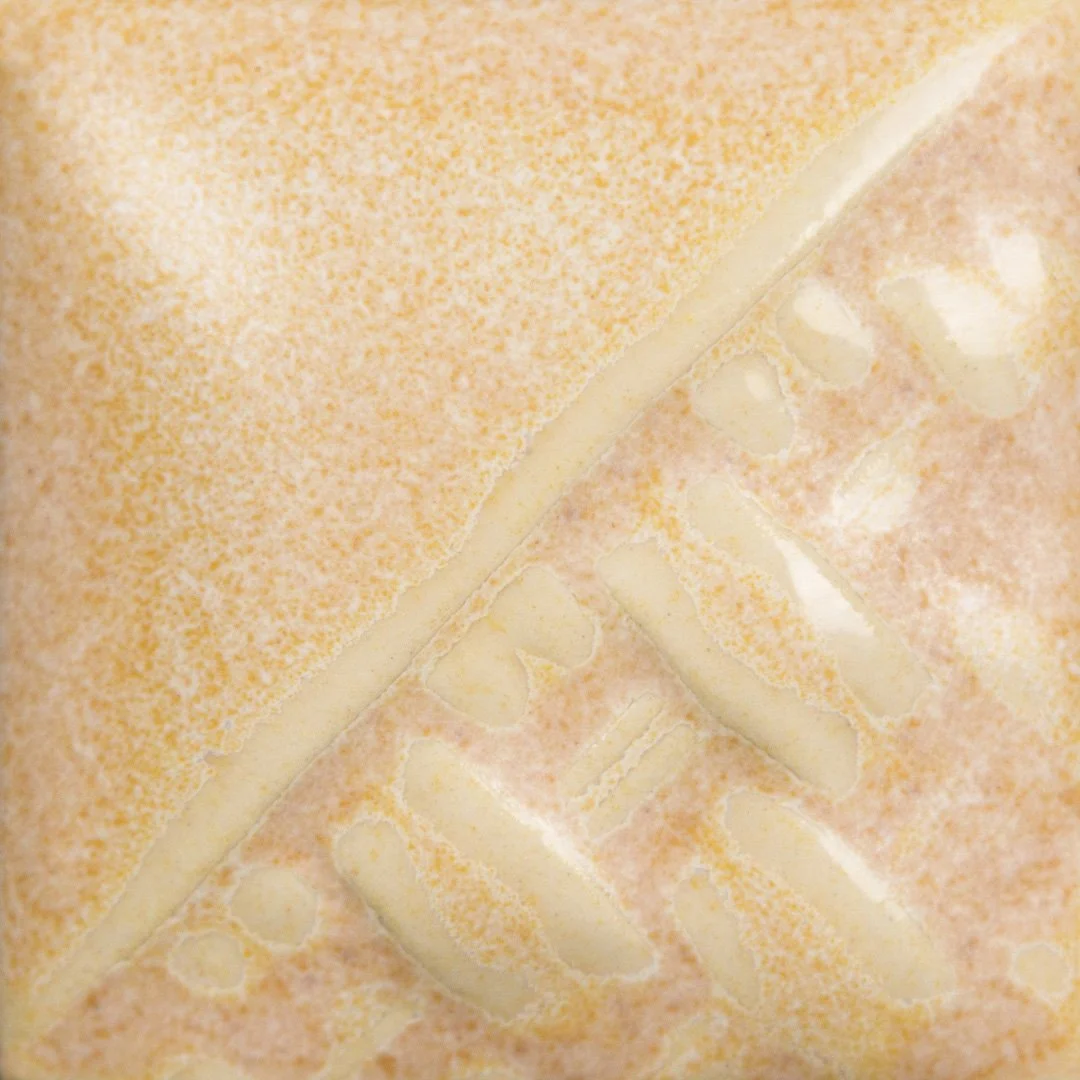
SW-196
Cone 6 oxidation (large photo): Sand Dollar is a satin, opaque, cream-colored glaze with white and gold mottling. Breaks glossy transparent over texture.
Cone 10 reduction (small photo): Glaze shifts to a glossy, variegated lavender purple with white micro-crystallization. Breaks blue/grey over texture. Enhanced mobility.
TIP: This glaze is fluid at 3 coats. Anticipate glaze movement with receded application on vertical surfaces to prevent unwanted running.
Wood and soda fire results will vary.

SW-198 - 1 Pint
Cone 6 oxidation (large photo): Rose quartz is a glossy, opaque, variegated pink glaze that breaks over texture. Pastel pink micro-crystallization may develop on vertical surfaces.
Cone 10 reduction (small photo): Glaze darkens and desaturates to a dusty rose with red and mauve variegation and white micro-crystallization. Breaks mauve grey over texture.
TIP: This glaze is fluid; Apply receding coats to avoid run off on vertical pieces and practice caution in combination. Over-application of Rose Quartz can cause surface issues. Thin application results in vibrant pink; light pink variegation develops with additional application. The micro-crystallization effect is enhanced in a rapidly cooling kiln.
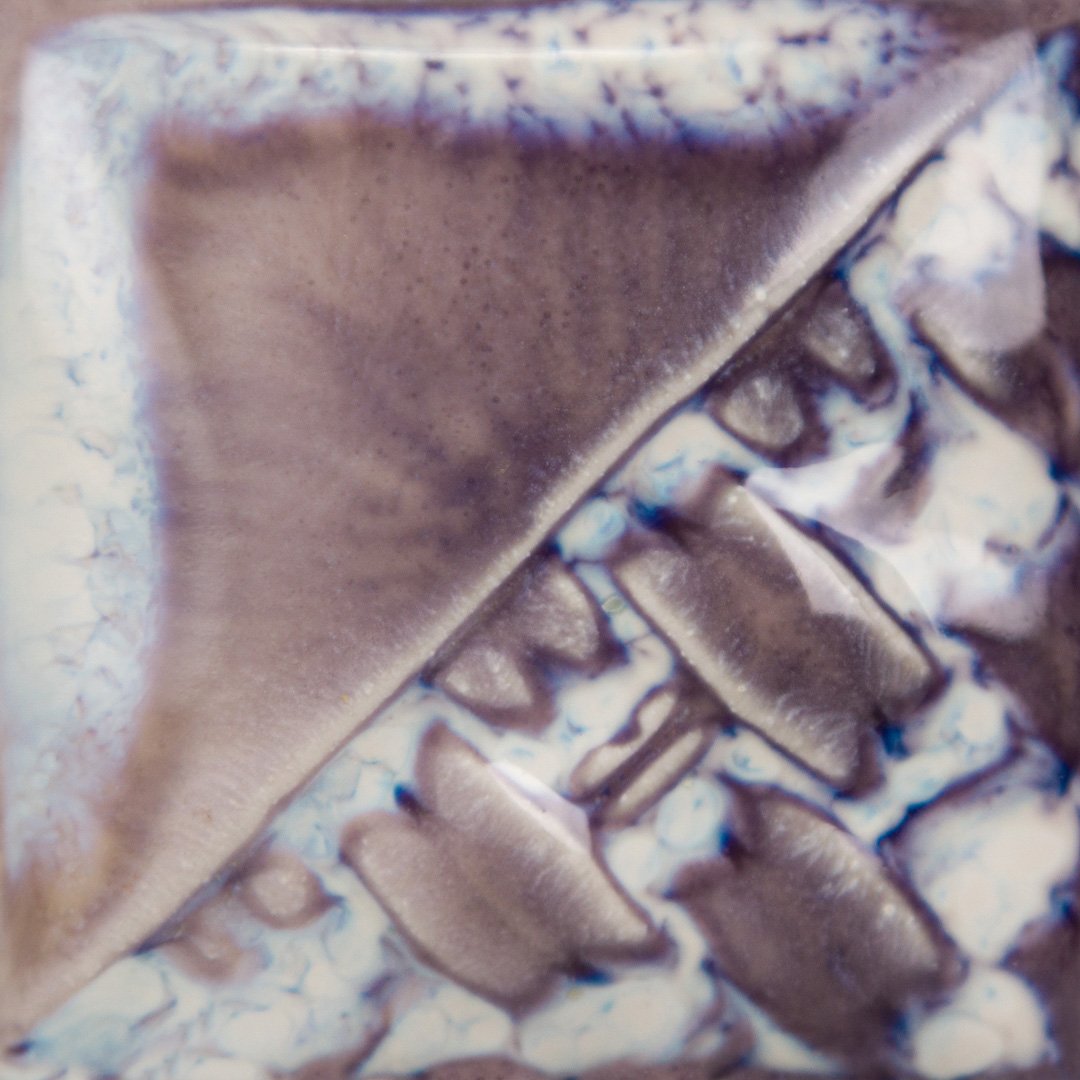
SW-214 - Pint (16oz)
Cone 6 oxidation (larger image): Micro Pearl is a glossy, semi-opaque white glaze with lilac undertones that breaks over texture. Iridescent micro-crystallization in shades of lilac and pale yellow will develop during the firing process.
Cone 10 reduction (smaller image): Glaze darkens to blue, purple and white variegation.
TIP: This glaze is stable at 3 coats. Additional coats or increased application thickness may result in movement. We recommend firing our micro glazes to cone 6 oxidation to reach crystalline development. Micro-Pearl achieves a stable, semi-opaque, frosted white result with a pearlescent satin finish when fired to cone 5. Can be used in oxidation or reduction firings. Results may vary. The choice of clay body, thickness of application, firing process, and temperature will greatly affect the fired results. Always test your application on your clay body in your kiln environment.
Wood and soda firing results will vary.
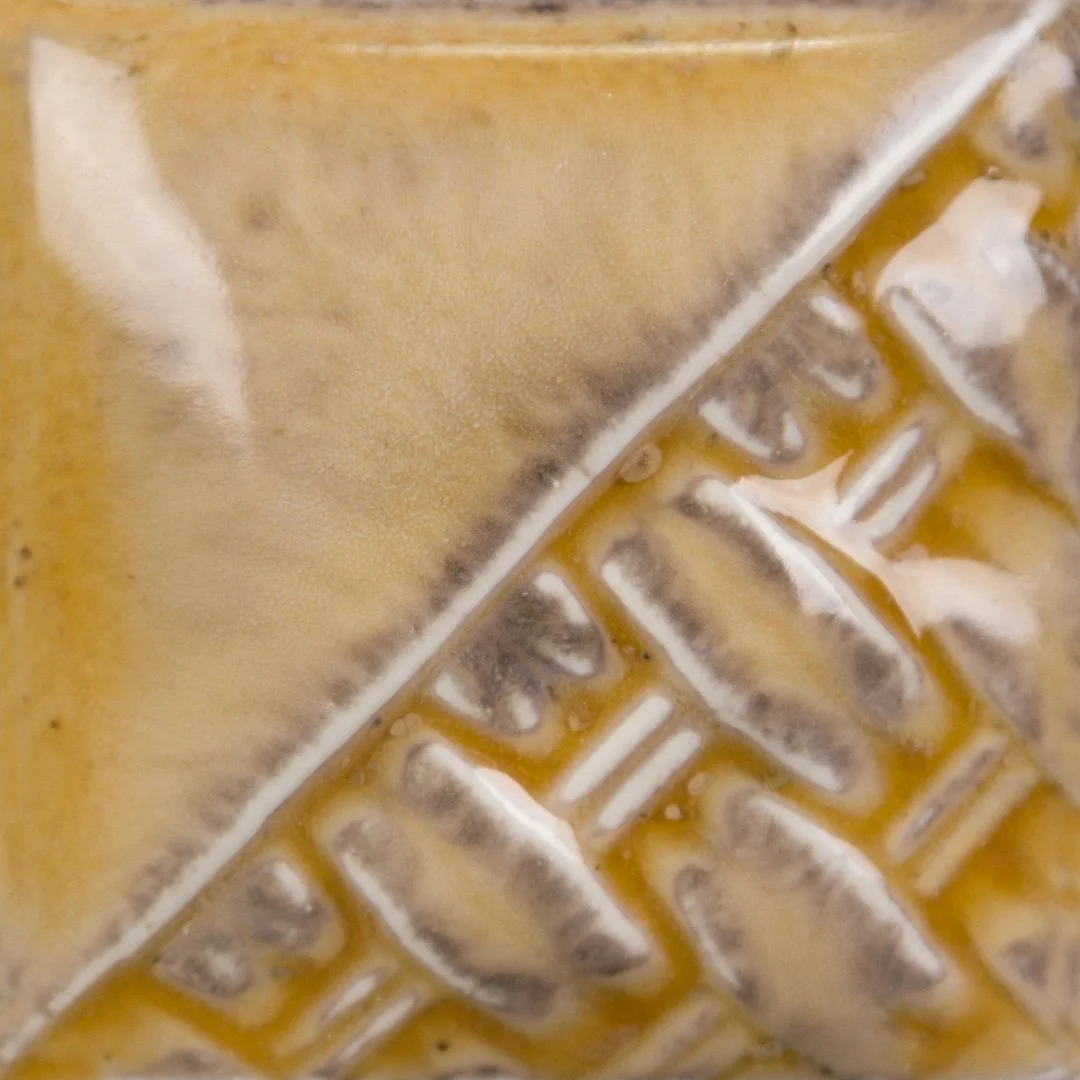
SW-215 - Pint (16oz)
Cone 6 oxidation (larger image): Micro Champagne is a glossy, translucent amber glaze with a mauve float that breaks over texture. Blooms of shimmering gold micro-crystallization will develop during the firing process.
Cone 10 reduction (smaller image): Glaze darkens.
TIP: This glaze is fluid at 3 coats. Recede application to avoid unwanted runoff. Due to the translucent nature of this product, be aware of your application consistency and thickness to avoid streaky brushstrokes. We recommend firing our micro glazes to cone 6 oxidation to reach crystalline development. Micro Champagne achieves a stable, semi-opaque, golden-amber result that breaks over texture and has a pearlescent satin finish when fired to cone 5. Can be used in oxidation or reduction firings. Results may vary. The choice of clay body, thickness of application, firing process, and temperature will greatly affect the fired results. Always test your application on your clay body in your kiln environment.
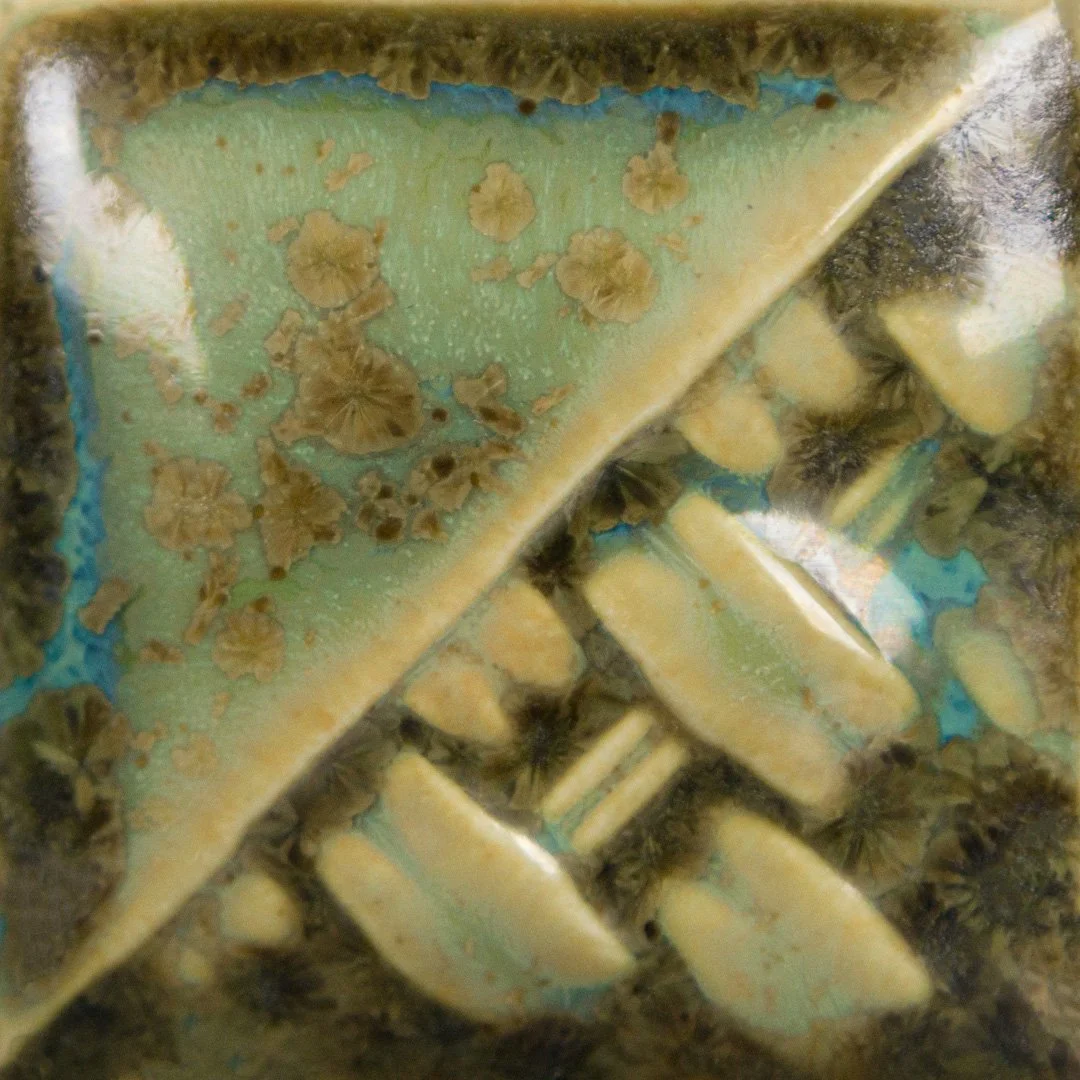
SW-216 - Pint (16oz)
Cone 6 oxidation (larger image): Micro Jade is a glossy, translucent, jade green glaze with a turquoise float that breaks over texture. Blooms of shimmering bronze micro-crystallization will develop during the firing process.
Cone 10 reduction (smaller image): Glaze turns to a variegated brown.
TIP: This glaze is fluid at 3 coats. Recede application to avoid unwanted runoff. Due to the translucent nature of this product, be aware of your application consistency and thickness to avoid streaky brushstrokes. We recommend firing our micro glazes to cone 6 oxidation to reach crystalline development. Micro Jade achieves a stable, semi-opaque olive result that breaks over texture and has a pearlescent satin finish when fired to cone 5. Can be used in oxidation or reduction firings. Results may vary. The choice of clay body, thickness of application, firing process, and temperature will greatly affect the fired results. Always test your application on your clay body in your kiln environment.

SW-217 - Pint (16oz)
Cone 6 oxidation (larger image): Micro Cerulean is a glossy, translucent, medium blue glaze with an aqua float that breaks over texture. Blooms of shimmering blue micro-crystallization will develop during the firing process.
Cone 10 reduction (smaller image): Glaze turns to a variegated grey/blue.
TIP: This glaze is stable at 3 coats. Additional coats or increased application thickness may result in movement. Due to the translucent nature of this product, be aware of your application consistency and thickness to avoid streaky brushstrokes. We recommend firing our micro glazes to cone 6 oxidation to reach crystalline development. Micro Cerulean achieves a stable, semi-opaque, deep blue result that breaks over texture and has a pearlescent satin finish when fired to cone 5. Can be used in oxidation or reduction firings. Results may vary. The choice of clay body, thickness of application, firing process, and temperature will greatly affect the fired results. Always test your application on your clay body in your kiln environment.
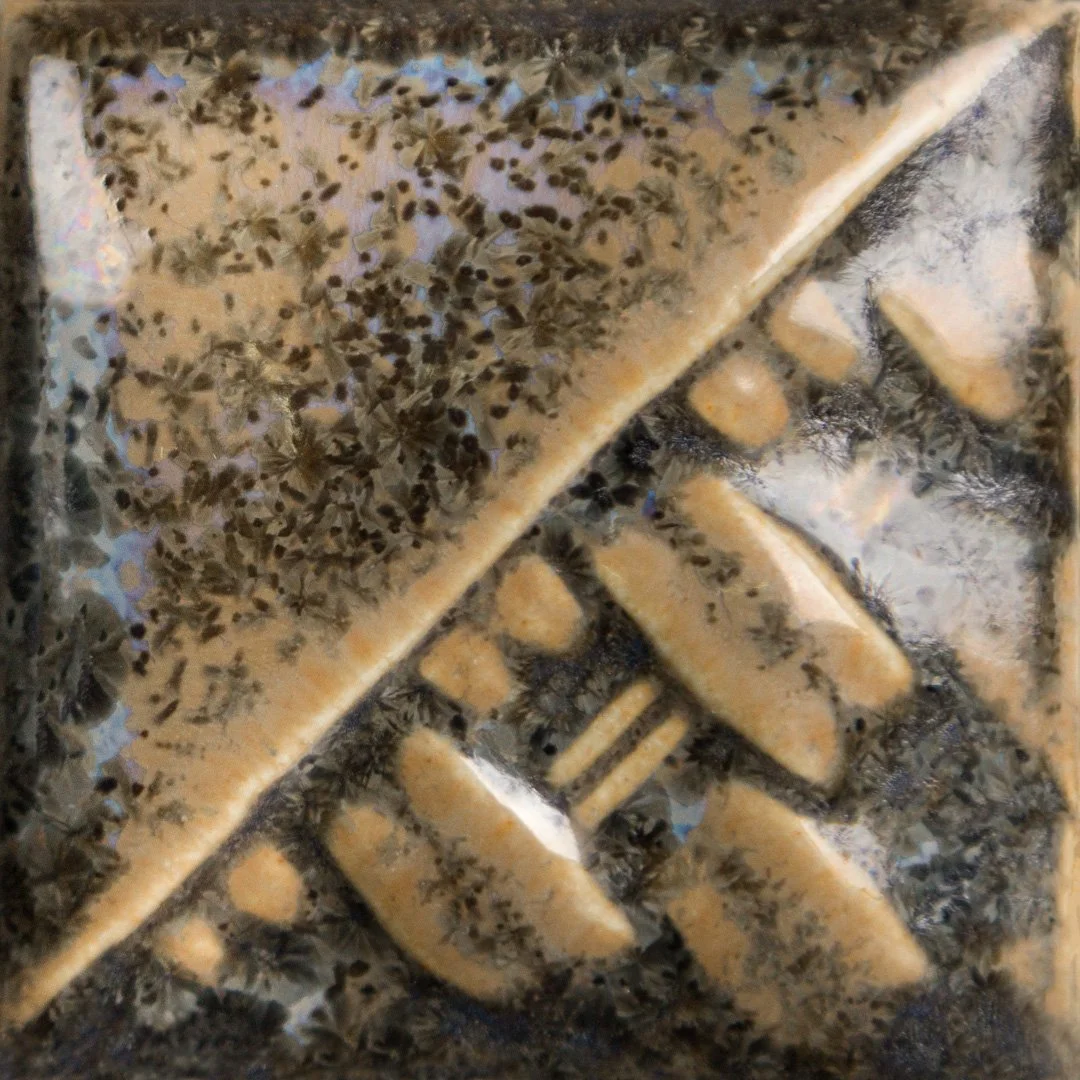
SW-218
Cone 6 oxidation (larger image):Micro Ash is a glossy, translucent, variegated charcoal glaze with a periwinkle float that breaks over texture. Blooms of shimmering onyx micro-crystallization will develop during the firing process.
Cone 10 reduction (smaller image):Glaze darkens.
TIP: This glaze is fluid at 3 coats. Recede application to avoid unwanted runoff. Due to the translucent nature of this product, be aware of your application consistency and thickness to avoid streaky brushstrokes. We recommend firing our micro glazes to cone 6 oxidation to reach crystalline development. Micro Ash achieves a stable, semi-opaque, warm charcoal result that breaks over texture and has a pearlescent satin finish when fired to cone 5. Can be used in oxidation or reduction firings. Results may vary. The choice of clay body, thickness of application, firing process, and temperature will greatly affect the fired results. Always test your application on your clay body in your kiln environment.
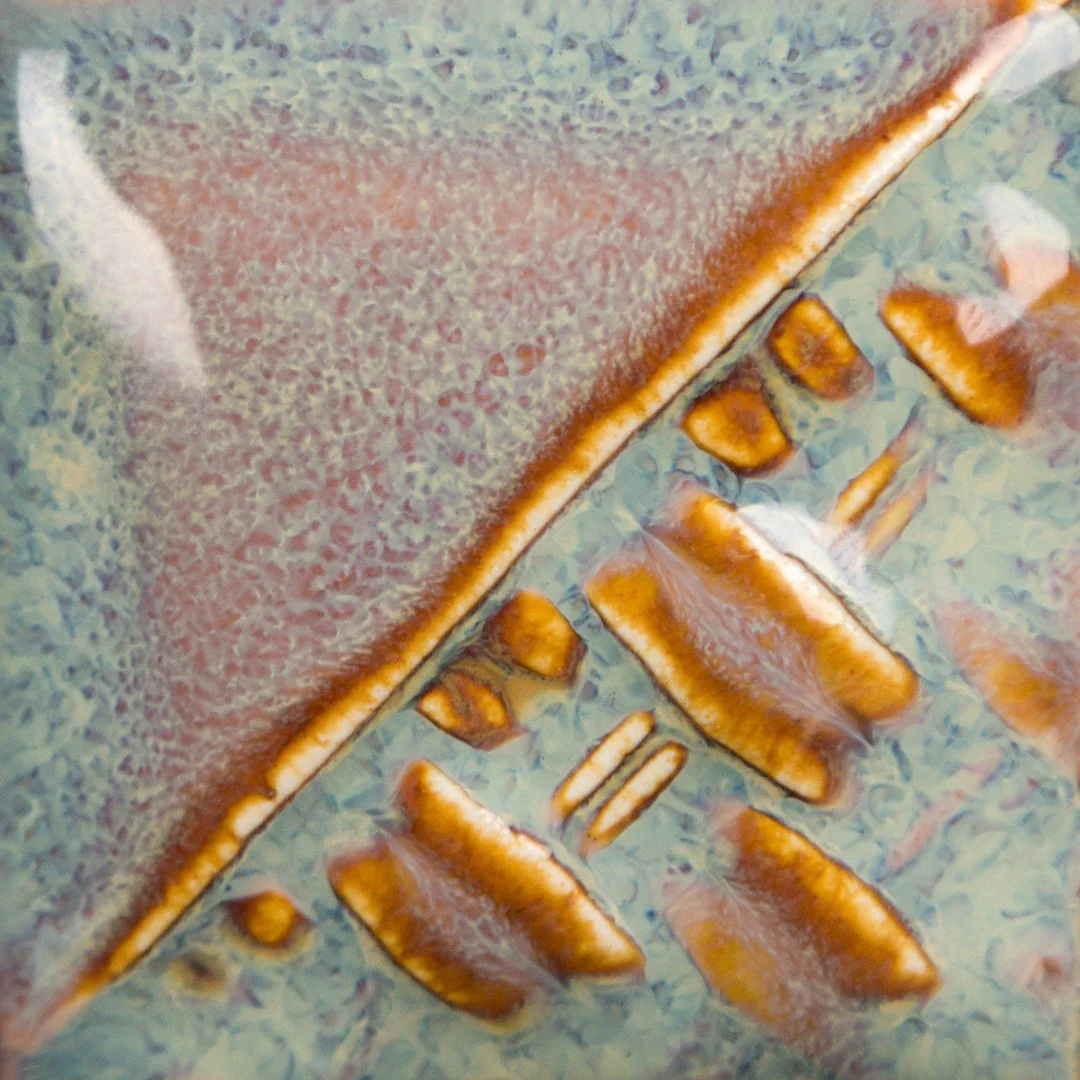
SW-219 - Pint (16oz)
Cone 6 oxidation (larger image): Opal Lustre is a glossy, semi-opaque glaze that displays variegated shades of blues, greens, and purples. Breaks warm brown over texture.
Cone 10 reduction (smaller image): Color flattens, and warm undertones come through.
TIP: This glaze is semi-fluid at 3 coats. Additional coats or increased application thickness may result in movement. Can be used in oxidation or reduction firings. Results may vary. The choice of clay body, thickness of application, firing process, and temperature will greatly affect the fired results. Always test your application on your clay body in your kiln environment.
Wood and soda firing results will vary.

Pint - 16oz
Cone 6: Blue Surf is a variegated cobalt blue glazes that breaks green.
Cone 10: Color darkens.
TIP: The thinner the application the the more green the glaze will appear. The thicker the more blue it will be. Where the glaze breaks it will be green.